Walk Wheel Cycle Trust is working with the City of Edinburgh Council to integrate walking, wheeling and cycling into a major new development in the north of the capital.
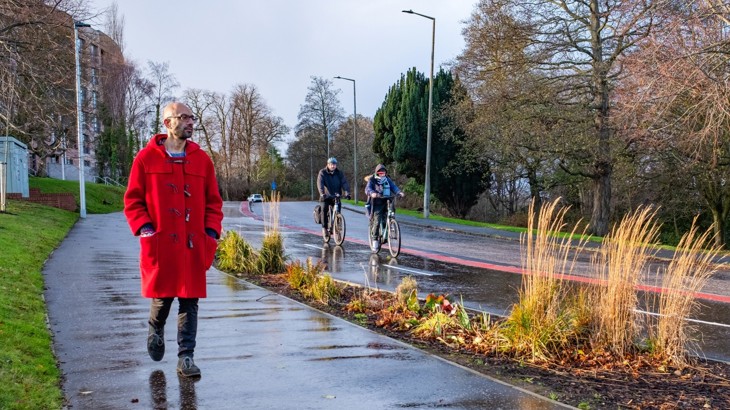
Active travel is key to connecting the new development to neighbouring communities. Credit: Michael Kelly.
A new walking, wheeling and cycling route in the north of Edinburgh has recently opened, as part of a £1.3bn regeneration of Granton Waterfront.
One of the most ambitious projects of its kind in Scotland, the regeneration will transform the former industrial area into a thriving new coastal community – celebrating Granton’s heritage whilst developing a sustainable neighbourhood fit for the future.
With 3,500 net zero homes, a new primary school and lots of green and open spaces, active travel links and provision for public transport are key elements of the new development.
Zooming in: making active travel options safe, convenient and appealing
The new route, formally opened last week by Transport and Environment Convener Councillor Stephen Jenkinson, runs along Marine Drive and West Shore Road, linking the existing communities at Pennywell and Muirhouse.
This creates more choices for local people to get around in healthier, greener and cheaper ways.
At the same time, the route provides a dedicated active travel connection to what will be Western Villages – a new housing development within the Granton Waterfront regeneration site.
The project has created a new, safe cycling route via an 850m long bi-directional segregated cycle path.
Likewise for pedestrians, new and improved footways and crossing points have enhanced accessibility and safety.

Alongside a new cycling route, the project has significantly improved the path for people walking and wheeling. Credit: Michael Kelly.
Extra seating and landscaping elements ensure that the route is appealing and attractive for anyone choosing to walk, wheel or cycle.
To future-proof the route, the design allows for bus routes to be extended to accommodate the new housing and population growth in the area.
Alongside sustainable drainage features which will mitigate flooding risk, new trees have been planted to improve biodiversity, with more to come in the next planting season.
The route has also made it easier to access Forthquarter Park, an important green public space for local people living in the area.
The project has been funded by the Scottish Government via Walk Wheel Cycle Trust’s Places for Everyone programme.

Now winding down, our Places for Everyone programme has delivered over 250 active travel infrastructure projects across 7 years. Credit: Michael Kelly.
Working in partnership: meeting the needs of local people
To help ensure the improvements live up to community needs, the City of Edinburgh Council has been working with a network of over 30 local organisations known as R2 (North Edinburgh Response and Recovery Group).
North Edinburgh Arts, a member of the R2 network, is playing an important role in supporting and promoting active travel in the Granton area.
They offer led walks and cycle rides, cycle training and Dr Bike maintenance sessions, and have even started up a community bike library, which includes cargo and adapted bikes.
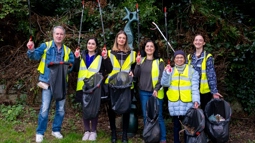
Volunteers from North Edinburgh Arts have also been involved directly in the path project, transforming the wooden planters at the north end of the route into colourful artworks, to make it more welcoming and appealing.
Ray is one of the cycle leaders at North Edinburgh Arts:
“We have a lot of people who, when they’ve joined the cycling group, don’t have the confidence to go on roads.
“So, to have cycle paths that are safe not only makes them feel much more comfortable but also gives them an avenue to reach other destinations that they wouldn’t be able to otherwise.
“It’s for anyone and everyone. Actually, I’ve started cycling due to the bike route. I haven’t cycled since I was a very young. And that’s given me the confidence.

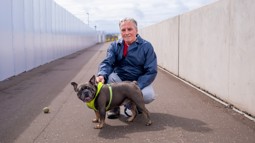
Ray and his colleagues are based out of the MacMillan Hub on Pennywell Road, and offer countless activities for the local community - not just cycling. Credit: Michael Kelly.
Zooming out: planning strategically for sustainable, thriving communities
The new active travel route builds on work done in 2023 to upgrade the Speirs Bruce Way, also delivered through Places for Everyone.
This enhanced the north-south active travel link between Waterfront Avenue and West Shore Road - connecting people to bus stops, the Pitt (a vibrant community hub and street food market), and Silverknowes Promenade.
Walk Wheel Cycle Trust has also fed into the design of future active travel improvements in the area, planned to connect in with these projects already in the ground.
They are set to progress in 2026 as part of the Council’s NEAT (North Edinburgh Active Travel) Connections programme, and the wider Granton Waterfront regeneration.

Speirs Bruce Way is named after local scientist William Speirs Bruce, famous for leading expeditions to Antarctica at the turn of the 20th century. Credit: Michael Kelly.
Together, these existing and upcoming improvements will help create a safe, accessible walking, wheeling and cycling network – connecting the new Granton Waterfront development to its surrounding areas.
But regeneration projects can be controversial. What does the existing community think?
Ray’s colleague Michael is from the local area, and helps run the community bike library and maintenance sessions at North Edinburgh Arts.
He agrees the new segregated paths make getting around much safer.
But he worries there is a disconnect between the plans for the redevelopment and the issues local communities are facing.
“People get upset that there’s a lot of reinvigoration happening close to their area, but not actually in their area.”
“It is nice to see infrastructure like this being put in. But when lots of people are going homeless or kids are hungry, it’s ‘why are we spending money on this’.
“I see the benefits of it, but I also see what people from this area are going to think about it.”

Michael hopes to see local communities brought into the conversation, as the regeneration progresses. Credit: Michael Kelly.
Ray agrees that local people need to be involved more in the regeneration and input what they want to see.
After all, it’s not just about transport or new homes in isolation.
“It all feeds into the narrative of everything is affected by everything. You need good transport, active paths, affordable houses, schools, medical centres. It’s all part of a bigger conversation.”