
When disabled people are involved early and meaningfully in transport planning, the results are clear: better decisions, more accessible places, and systems that work for more people. Our latest research examines how local authorities currently engage disabled people in transport and public realm projects, focusing on the use of access panels and identifying the gaps that remain.

Our latest report sets out key recommendations for national government and local transport authorities to improve inclusive engagement. Credit: Walk Wheel Cycle Trust
What are access panels and why are they needed?
Access panels are groups of disabled people brought together to advise organisations on accessibility and inclusion.
They allow disabled people to share their lived experience, identify barriers in plans and policies, and suggest practical improvements.
But they are only one part of effective engagement: no single panel can represent the full diversity of disabled people.
Our research, which is part of the Community Climate Action Project, coordinated by Bristol Climate & Nature Partnership and funded by The National Lottery’s Climate Action Fund, shows that meaningful inclusion requires a wider range of approaches.
This can included many options such as open consultations, user testing and targeted outreach.
Engagement is inconsistent across the UK
Our research found that engagement with disabled people varies widely between local authorities.
In some places, structured engagement helps shape projects and leads to more inclusive outcomes.
But in many areas, engagement remains informal or ad hoc, often relying on a small number of highly committed individuals.
Disabled people are also frequently brought in too late in the process, after major decisions have already been made.
This limits their ability to influence designs and policies in meaningful ways.
Limited resources are another barrier.
Many local authorities lack dedicated funding for accessible engagement, technology, or financial compensation for disabled people contributing their expertise.
The study also highlighted the absence of national coordination.
Without shared guidance, support or oversight, local authorities often develop engagement approaches in isolation, leading to gaps, duplication and missed opportunities to share good practice.
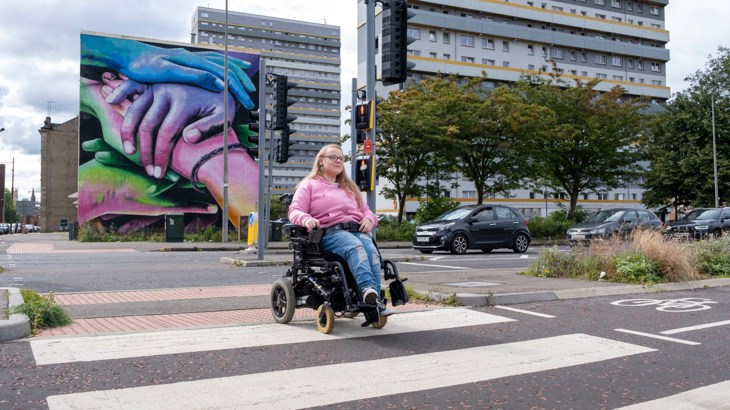
Disabled people are frequently brought in too late in the process, after major decisions have already been made. Credit: Alan Mcateer
Why inclusive engagement matters
When disabled people are involved early and meaningfully, the results are clear: better decisions, more accessible places, and transport systems that work for more people.
But achieving this requires stronger structures, consistent guidance and sustainable resourcing.
Without these changes, engagement risks remaining uneven, and many disabled people will continue to be left out of decisions that affect how they move around their communities.
Key recommendations
The report sets out key recommendations for national government and local transport authorities:
1. Establish a National Access Panel Network for transport, coordinated by Active Travel England, to share best practice and support consistent engagement across the country.
2. Encourage and support local transport authorities to create access panels and embed disabled people’s input in governance and decision-making processes.
3. Ensure access panels are properly resourced, with funding for officer time, accessibility requirements and fair payment for participants.
4. Combine lived experience with better use of data to identify barriers and prioritise improvements where need is greatest.
5. Provide training and support for both officers and disabled participants so engagement can meaningfully shape transport planning.
With the right support and leadership, access panels can play an important role in shaping transport systems that are inclusive from the start, helping create places where more people can walk, wheel and cycle.


