Imagine if your route from A to B was more than just a travel corridor. Our Margate to Ramsgate project put the community at the heart of placemaking; creating social infrastructure that works for everyone. We asked a fundamental question: How do we move along this route — and what kind of places do we want to experience along the way?
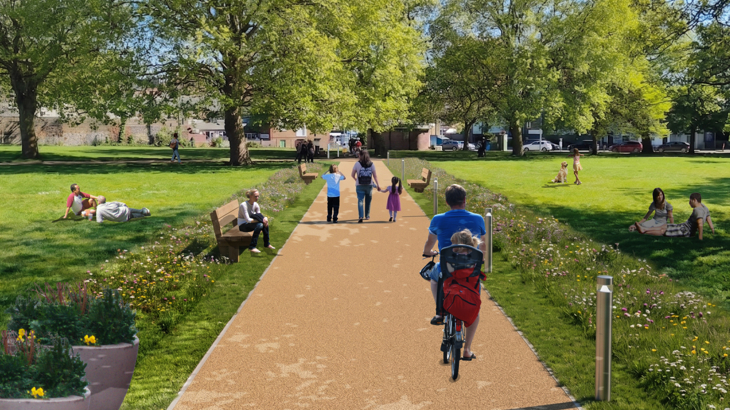
Boundary Park expresses the project's wider philosophy - a park is not just a travel corridor, but a place where people meet, spend time and connect to each other. Credit: Chiu Qu
A place-based approach to infrastructure planning
What if we created places where people can not only walk, wheel and cycle, but also stop, meet, play, visit local businesses, enjoy art and culture and spend time together as a community?
Our Margate to Ramsgate project did exactly that.
The project applied a people-first approach to infrastructure planning, balancing movement with placemaking.
Rather than focusing solely on transport, the project considered how streets, parks, junctions and public spaces could support community life, cultural activity and everyday social interaction.
Through a multidisciplinary approach combining engineering, urban design, landscape architecture and community engagement, the project created welcoming public realm improvements that encourage people to spend time in the places they move through.

The project involved the community right from the start. One thing was evident, people wanted to see more space for pedestrians, greening, fountains, benches to rest and stronger links to local attractions. Credit: Chiu Qu
Designing with and for the community
We involved the community from the start of the project to share their vision for the local area.
They shared with us a wish for fountains, more space for pedestrians, green spaces and benches.
When speaking to people, it was clear that the route should not simply pass through places; it should help those places communicate and connect.
From this, the team developed key proposals:
Reimagining key gateways in Margate with reduced traffic speeds, planting, seating and opportunities for play.
Transforming Westwood Cross roundabout into a Dutch-style junction designed around safety, comfort and accessibility for pedestrians, wheelchair users and cyclists.
Enhancing Boundary Park with a high-quality path through the park surrounded by greenery, wildflowers, lighting, benches and drinking fountains.
Exploring opportunities for cultural routes, civic spaces and child-friendly networks that connect people with local amenities and services.
These improvements are important because they represent more than a new path.
They represent a community route within a dense residential area, that allows people to connect with nature, their surroundings and their community.
Together we change how our communities travel, helping people to walk, wheel and cycle for more of their everyday journeys
Based across the UK with the shared ethos and passion for active travel, we make it easier to walk, wheel and cycle by creating healthy, sociable, accessible and inspiring places with and for communities.
We transform urban areas into vibrant, enjoyable places that enhance the overall quality of life, providing a sense of belonging and security for everyone.
Find out more about our infrastructure, urban design and planning service offer

Large roundabouts like Westwood Cross can present significant challenges for active travel. The project proposed a Dutch-style junction instead to fundamentally rethink the geometry of the junction and reorder its structure. Credit: Chiu Qu
Beyond transport: the role of cultural and social infrastructure
A bench may appear to be a small intervention, but its social value can be significant.
It is a place for an older person to rest. A parent to wait and watch their child play. For neighbours to meet and connect. Or simply for someone to sit, rest and enjoy their surroundings.
This project has shown the social value benches, planting, play areas, fountains and public spaces provide — they are part of the vital social infrastructure of a community.
When we introduce amenities like these, we create the conditions for people to share space at different times of the day.
It also makes active travel more comfortable for longer journeys.
The project also revealed a wider opportunity that goes beyond conventional transport planning.
Margate and Ramsgate have a strong and growing creative identity.
Galleries, museums, street-art murals, independent cultural venues, musicians and other forms of artistic activity are distributed across the towns every single day.
Infrastructure can become more than a transport connection, it can show artwork and can support the creative economy whilst celebrating local artists.
Future opportunities could include extending art trails, strengthening wayfinding and introducing installations and murals.

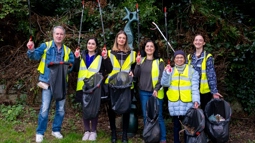
From councillors, stakeholders and the community, speaking with as many people as possible has helped to create an infrastructure solution that works for everyone. Credit: Walk Wheel Cycle Trust (confirm credit)
Working together: from movement corridors to social spaces
The engagement process reinforced this wider vision.
One of the most valuable aspects of the project was that conversations with councillors, stakeholders and the community did not simply confirm the technical proposals.
They helped reveal opportunities that extended beyond the original project boundary.
From a connected school network to connections between new developments and existing communities, engaging with as many people as possible during this project has created an infrastructure that works for everyone.
By using our multidisciplinary approach to transport planning, urban design, placemaking and stakeholder engagement, the project demonstrates how infrastructure can become a catalyst for wider regeneration and community wellbeing.
It shows that successful infrastructure is not measured solely by how efficiently it moves people.
Its value also lies in the places it creates, the connections it strengthens, and the opportunities it unlocks for communities.
From safer journeys and improved accessibility to vibrant public spaces and stronger social connections, the Margate to Ramsgate project illustrates how people-centred infrastructure can help shape healthier, more resilient and more connected places for the future.
Partner with us to create more change like this
Walk Wheel Cycle Trust works with partners like you to change how our communities travel, helping people to walk, wheel and cycle for more of their everyday journeys.
Together, we’re helping transform towns and cities into healthier, greener places that benefit communities and empower change.
Our Infrastructure, urban design and planning offer delivers a tailored package of interventions based on the specific needs of your local area.
When we change how we travel, we change everything. Our health. Our wellbeing. Our world.
Find out more about our Infrastructure, urban design and planning service offer