
Winter weather can make cycling more challenging. Snow, ice, wind and debris all increase risk, and in some conditions it may be safer to walk instead. If you do choose to cycle, give yourself extra time, reduce your speed and follow these tips to stay as safe as possible.
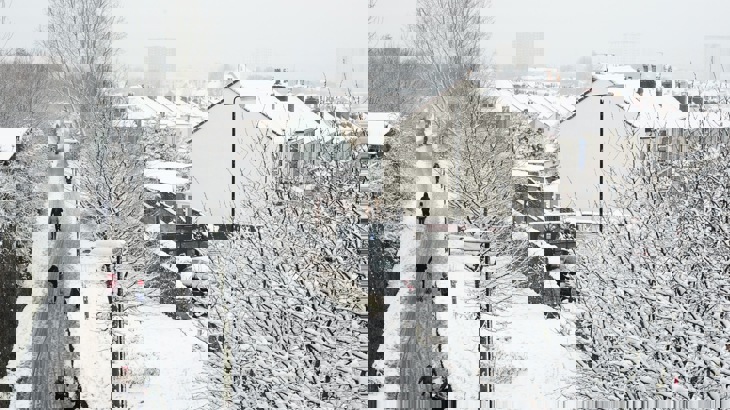
1. Check conditions before you travel
Check the weather forecast before setting off so you can plan clothing, equipment and your route. Ice is most likely to form overnight, so take extra care on early morning journeys.
Please note: during snowy or icy weather, National Cycle Network paths are not cleared of snow or ice and are not gritted.
2. Dress for warmth and grip
Cold hands and feet affect comfort and control. Wear warm gloves and non-slip footwear to reduce the chance of slipping on pedals or when stopping. Overshoes, thermal socks and winter boots can all help.
3. Use the right bike or tyres
Wider or knobbly tyres offer better grip, and studded tyres may help in very icy conditions. If possible, use a bike better suited to winter, such as a mountain or cyclocross bike. Lowering tyre pressure slightly can also improve traction.
4. Lower your saddle
Dropping your saddle lowers your centre of gravity and makes it easier to put a foot down quickly if you wobble or slide.

If using a busy path, be aware of other users and remember that it's going to take longer to slow down.
5. Choose routes carefully
Main roads are more likely to have been cleared by traffic and treated with salt. If conditions are icy, these may be safer than quieter routes. Take particular care when turning onto side streets or paths that may not have been treated.
6. Ride steadily and avoid hazards
Frozen puddles are more likely near the gutter, so riding slightly further out can be safer. Reduce your speed, pedal smoothly and avoid sudden movements.
Brake gently using the rear brake only, or avoid braking altogether if you’re riding on ice.
7. Watch for wind damage and debris
High winds can leave fallen branches or trees on paths. If you encounter debris on the National Cycle Network, please let us know.
On Walk Wheel Cycle Trust-managed routes, regular inspections are carried out year-round. Dangerous debris will be assessed as a priority and paths may be temporarily closed so work can be carried out safely.
8. Keep checking your bike
Snow and ice can quickly build up on your bike. Stop occasionally to check that your brakes are clear and working properly.


